Looking for a suburb that makes it easier to stay active in your everyday routine, not just on weekends? Peachtree City stands out because it offers more than homes and cul-de-sacs. It gives you a connected way of living, with paths, parks, lakes, and village-style planning that shape how you move through the day. If you are comparing Greater Atlanta communities and want a place that supports an active suburban lifestyle, this guide will help you see why Peachtree City continues to draw attention. Let’s dive in.
What makes Peachtree City different
Peachtree City is a master-planned community founded in 1959 in Fayette County. As of July 2024, the city’s population was estimated at 40,758, and it spans about 25.14 square miles. Even at that size, it often feels more connected and intentional than a typical suburb.
That difference starts with the city’s village-based design. Peachtree City developed around villages, each with shopping areas, recreation options, and other daily-use destinations nearby. Today, the main village areas are Aberdeen, Braelinn, Glenloch, Kedron, and Wilksmoor.
This layout helps explain why the city does not feel like endless subdivision sprawl. Planning materials show a village-center model where retail, office, services, recreation, and some higher-density housing are placed closer to activity centers, while lower-density residential areas sit farther out. For many buyers, that creates a more practical and appealing everyday experience.
Why active buyers notice Peachtree City
For many people, an active lifestyle means more than joining a gym. It means living in a place where movement, convenience, and outdoor time are built into your normal routine. That is one of Peachtree City’s biggest draws.
The city’s hallmark is its shared-use path network of more than 100 miles. These paths are designed for pedestrians, cyclists, and motorized carts, and residents use them to reach parks, shopping centers, and other destinations across the city. Peachtree City also reports about 11,000 registered motorized carts, which tells you how central this system is to daily life.
Instead of getting in the car for every errand, you may be able to take a cart, walk, or bike for part of your day. That built-in mobility gives the city a lifestyle advantage that many suburban buyers find hard to match. It is not just a fun feature. It is part of how the community functions.
The path system shapes daily life
The path network connects villages and activity centers in a way that supports walking, bicycling, and cart use. That means active living is not limited to recreation. It can be part of how you get to parks, community spaces, and local services.
For buyers relocating from a more car-dependent area, this can feel like a meaningful upgrade. You still get the space and residential feel of suburbia, but with a stronger sense of connection and movement. That combination is a major reason Peachtree City appeals to people who want both convenience and lifestyle.
Recognition for biking and active design
Peachtree City’s official accolades include PeopleForBikes’ Best Cities for Biking in Georgia rankings for 2024 and 2023, along with bicycle-friendly and runner-friendly community designations. Those recognitions support what many buyers notice right away when they visit. The city is built to make active transportation and outdoor recreation easier.
Outdoor amenities add real lifestyle value
If you want a suburb where green space is not an afterthought, Peachtree City offers a strong case. Planning documents state that more than 30% of the city is permanently preserved greenspace, totaling more than 3,800 acres. That kind of preservation shapes both the look and feel of the community.
You can see that value in the city’s parks, lakes, and nature areas. Peachtree City lists more than 40 parks, fields, and recreation centers, giving buyers a wide range of ways to spend time outdoors. Whether you enjoy organized recreation or quieter natural settings, the options are broad.
Lakes and water access
Peachtree City has three lakes that support recreation and scenic views:
- Lake Peachtree, oriented to residents and guests, with non-gas boating restrictions
- Lake Kedron, open to the general public with electric boats only
- Lake McIntosh, county-owned with a pass framework for non-county residents
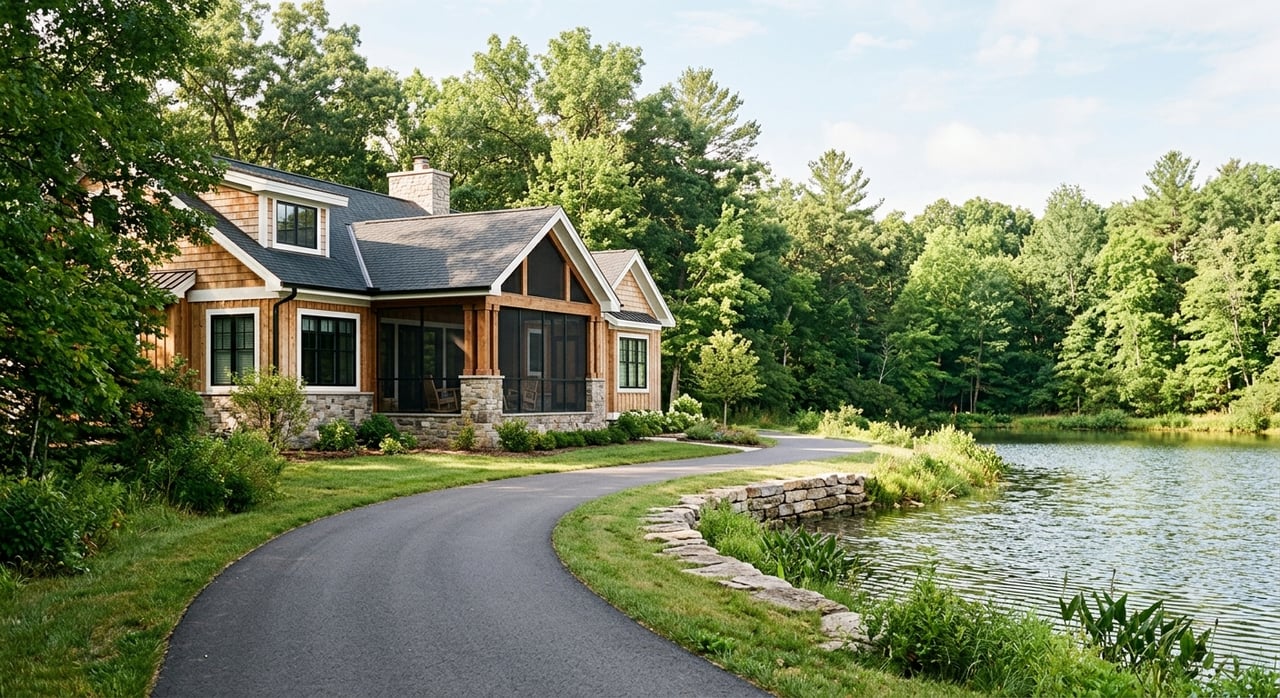
These lakes add another layer to the outdoor lifestyle. For some buyers, that means paddling, boating, or simply enjoying water views. For others, it means choosing a community where nature feels close at hand.
Parks, trails, and recreation spaces
The city’s recreation facilities include major destinations such as:
- Athletic Complex
- Kedron Fieldhouse and Aquatic Center
- Braelinn Recreation Complex
- BMX track
- Dog park
- Disc golf facilities
There are also designated nature areas such as Line Creek Nature Area, Flat Creek Nature Area, Somerby Woods Nature Area, and Spyglass Island. These spaces are highlighted by the city for trails, birdwatching, picnicking, and lake views. Together, they give the community a balance of active recreation and more relaxed outdoor experiences.
Community events help create connection
An active suburban lifestyle is not only about exercise or recreation. It is also about having easy ways to plug into the community. Peachtree City has a steady rhythm of public events that help create that sense of connection.
Visit Peachtree City highlights annual and recurring events such as the Shakerag Arts Festival, Magnolia Fine Arts Festival, Hispanic Heritage Festival, Farmers Market, Food Truck Thursday, Sunset Sounds, and the city’s Fourth of July celebration with a parade and fireworks over Lake Peachtree. For buyers who value community life, these events can add to the city’s long-term appeal.
Housing options fit different life stages
One reason Peachtree City attracts a wide range of active suburban buyers is that the housing mix is broader than many people expect. While detached homes remain an important part of the market, city development tracking also shows townhome, condo, and mixed-use projects. That matters if you want lifestyle flexibility.
As of April 2026, current development tracking included projects such as Bradshaw Estates, Laurel Brooke Townhomes, Peachtree Court Townhomes, and Aberdeen Mixed-Use. This suggests buyers may find options that fit different priorities, including lower-upkeep living near activity centers.
That variety can work well for several types of buyers:
- Relocating buyers who want a connected suburban setting
- Move-up buyers seeking space plus amenities
- Downsizers who want to simplify without giving up lifestyle
- Buyers considering single-family homes, condos, or townhomes
A market with strong owner occupancy
Census data shows a 72.1% owner-occupied housing rate in Peachtree City. The median owner-occupied home value is $482,500, and median gross rent is $2,086. Median household income is $113,987.
Those numbers point to a relatively established, owner-oriented market. For buyers, that can be helpful context when evaluating long-term fit and market positioning. It also reflects why Peachtree City often appeals to people making thoughtful lifestyle and investment decisions at the same time.
A community with a broad age mix
Peachtree City is not limited to one life stage or buyer profile. Census data shows 23.4% of residents are under 18, while 21.0% are age 65 or older. That broad mix helps explain why the city can appeal to both households seeking an active suburban environment and older buyers looking for a lifestyle-focused move.
Location supports convenience
Peachtree City offers a suburban setting, but it still keeps you connected to the wider metro area. The city is about 20 miles southwest of Atlanta and has direct access to I-75, I-85, and State Highways 54 and 74. It also notes convenient access to Hartsfield-Jackson Atlanta International Airport and Atlanta Regional Airport-Falcon Field.
That accessibility matters if you want room to breathe without feeling cut off. Census data reports a mean commute time of 28.6 minutes for workers age 16 and older, which aligns with the needs of many suburban commuters and relocating professionals.
School district context for relocation buyers
If schools are part of your relocation research, the basic district overview is straightforward. Peachtree City is served by Fayette County Public Schools, which also serves Brooks, Fayetteville, Tyrone, and Woolsey. The district reports 14 elementary schools, 5 middle schools, and 5 high schools.
For many buyers, that district context is a useful starting point while they explore housing options by village and commute pattern. Because home decisions often involve lifestyle and long-term planning, it helps to look at the full picture rather than one factor alone.
Why buyers keep Peachtree City on the shortlist
Peachtree City appeals to active suburban buyers because it combines several features that are hard to find in one place. You get a planned layout, strong outdoor access, a path system that supports everyday mobility, and a mix of housing options across different life stages.
You also get a community that feels intentional. The preserved greenspace, village structure, recreation choices, and event calendar all work together to create a lifestyle that feels more connected than many suburbs of similar size.
Historically, the city has also received national attention, including a 2012 Bloomberg Businessweek best-places-to-raise-kids mention reported by The Citizen. While that is best viewed as historical context rather than a current ranking, it reflects a reputation that has helped keep Peachtree City on many buyers’ radar over time.
If you are comparing Greater Atlanta communities and want help weighing lifestyle, commute, home style, and long-term fit, working with an experienced advisor can make the process much clearer. For tailored guidance on buying or selling in the Atlanta area, connect with Connie Morelle.
FAQs
Why does Peachtree City appeal to active suburban buyers?
- Peachtree City appeals to active suburban buyers because it offers more than 100 miles of shared-use paths, extensive parks and recreation facilities, three lakes, preserved greenspace, and a village-style layout that supports movement and convenience in daily life.
What is the Peachtree City path system used for?
- The Peachtree City path system is used by pedestrians, cyclists, and motorized cart users to reach shopping centers, parks, schools, and other activity areas throughout the city.
What outdoor amenities are available in Peachtree City?
- Peachtree City offers three lakes, more than 40 parks and recreation facilities, and nature areas such as Line Creek Nature Area, Flat Creek Nature Area, Somerby Woods Nature Area, and Spyglass Island.
What types of homes can buyers find in Peachtree City?
- Buyers in Peachtree City may find a mix of single-family homes, townhomes, condos, and some mixed-use residential options, depending on location and current inventory.
Where is Peachtree City located in relation to Atlanta?
- Peachtree City is about 20 miles southwest of Atlanta and has access to I-75, I-85, State Highways 54 and 74, Hartsfield-Jackson Atlanta International Airport, and Atlanta Regional Airport-Falcon Field.
What school district serves Peachtree City?
- Peachtree City is served by Fayette County Public Schools, a district that reports 14 elementary schools, 5 middle schools, and 5 high schools.